Build a Neurodiversity-Aware Culture That Retains Talent
Half-day training workshops and ongoing coaching for UK trusts, charities, and businesses. Evidence-based neurodiversity education designed to shift how your team understands, includes, and supports neurodivergent people.
Why Organisations Are Investing in Neurodiversity Training
Neurodiversity, ADHD, autism, dyslexia, and other neurological differences, affects up to 20% of your workforce. Yet most organisations still treat neurodiversity as a compliance issue or a problem to manage, not as a dimension of human experience that can drive innovation and resilience when properly understood.
The result?
Talented neurodivergent employees feel unsupported and leave
Managers lack language and confidence to have better conversations
Leadership teams miss diverse perspectives that drive better decisions
Inclusion initiatives fail because they're built on misunderstanding, not knowledge
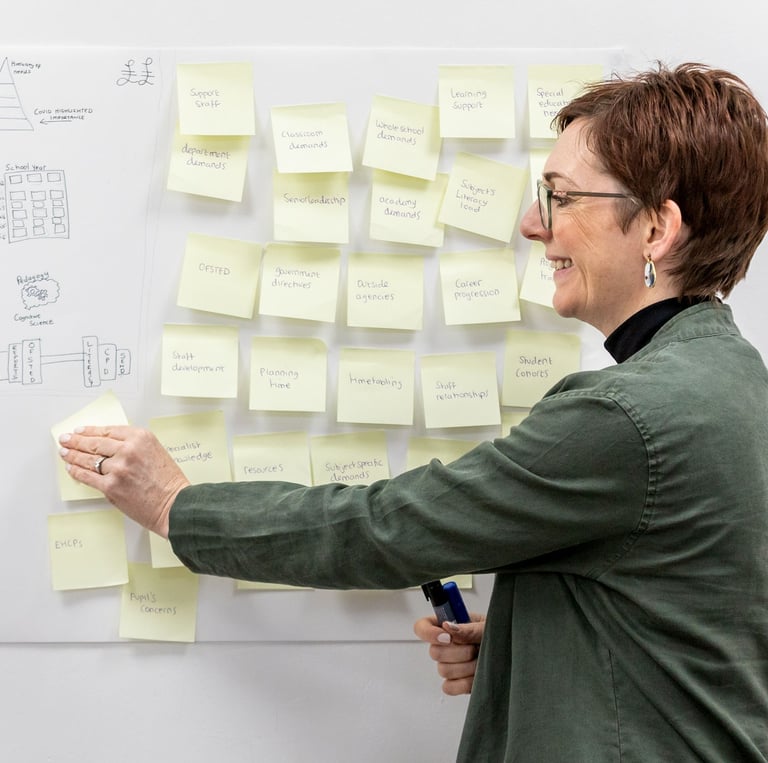
Culture change starts with knowledge.
When your organisation understands neurodiversity from the inside out, not as a box-ticking exercise, but as a real shift in how teams work together, retention improves, psychological safety increases, and your people thrive

Neurodiversity Training Designed for Real Organisations
Knowledge That Sticks
What neurodiversity actually is (and isn't)
How neurodivergent brains work differently, and why that matters in your sector (trust, charity, or business)
Real examples of neurodiversity in action at work
How to recognise neurodiversity and reduce stigma
Better Conversations
New language teams can use to talk about neurodiversity without judgment
How to move beyond "managing" neurodivergent people to building systems that let them thrive
Practical strategies managers can use on Monday morning
Independent Capacity
Your teams walk away with tools, language, and confidence to sustain progress independently
Access to resources you can use after the workshop
Optional Ongoing Support
Leadership coaching for senior teams exploring culture change in depth
Follow-up sessions to embed learning across the organisation
Is This Right for Your Organisation?
This training works best for organisations that:
Want to genuinely understand neurodiversity, not just comply with policy
Have neurodivergent team members and want to support them better
Are leading culture change and need teams on board
Recognise that inclusion is a competitive advantage, not a box to tick
Who attends? Whole-team sessions (senior leadership, managers, HR), or tailored sessions for specific departments.
Sector experience: I've worked with trusts, charities, and businesses across education, health, social services, and corporate sectors.


Built on Knowledge and Real Experience
Kelly Challis
Level 7 Qualification in Systems Thinking including strategic management, trained to understand how organisations actually work
Qualified Teacher with expertise in adult learning and behaviour change
ICF-Registered Level 5 Coach, trained in psychological safety, deep listening, and transformational coaching
15+ years designing and leading training courses and supporting individuals and organisations through change


This isn't a generic neurodiversity awareness presentation. This is grounded in systems thinking, adult learning, and real coaching experience.
What clients say:
"Coaching with Kelly has been a transformational process for me. Kelly provides a highly psychologically safe space, and sessions are wholly centred on my goals. Kelly asks intelligent, thought-provoking questions and has supported and empowered me to develop a range of strategies that are meaningful."
Claire, Clinical Senior Team Lead
The Process: From Enquiry to Workshop to Impact
Step 1: Free Consultation (15–20 mins)
You tell me about your organisation, what's triggered the interest in neurodiversity training, and what success looks like
I ask questions to understand your context (team size, sector, specific challenges)
We check if we're a good fit
Step 2: Design
I design a half-day workshop tailored to your organisation's needs and sector
I confirm dates, attendees, and whether you want remote or in-person delivery
Step 3: The Workshop
Interactive, evidence-based session (half day, typically 9am–12.30pm or 1pm–4.30pm)
Mix of input, discussion, and practical tools teams can use
Bespoke to your context, not a generic presentation
Step 4: Optional Ongoing Coaching
Leadership coaching for senior teams (ongoing, optional)
Follow-up sessions if you want deeper embedding
Common Questions
Q: How much does this cost?
A: Half-day workshop pricing depends on team size and whether you want remote or in-person delivery. During your free consultation, I'll provide a clear quote. Optional coaching packages are discussed separately. A typical package is £500 for a half day's training with coaching from £75 per hour. Discounts for block bookings are available.
Q: Can you work with our team virtually?
A: Yes. I deliver workshops remotely, in-person, or hybrid depending on your preference.
Q: How long after the workshop do we see impact?
A: Teams leave with language and tools they can use immediately. Real culture shift, where these ideas become embedded in how you work, typically takes 3–6 months, especially if you add follow-up coaching.
Q: We've already done some neurodiversity training. Will this be different?
A: Possibly. Most generic awareness training is "here's what neurodiversity is" without connecting it to how your organisation actually works. This training is designed around your systems, your teams, and your specific challenges.
Q: Do you work with small teams or only large organisations?
A: I work with teams of any size. The workshop can be tailored to small senior teams or rolled out to whole organisations.
Ready to Build a Neurodiversity-Aware Culture?
The first step is a free, no-pressure conversation. You'll leave with a clear sense of what's possible and whether this is the right move for your organisation right now.